

Latest
Speech
04 August 2026
Remarks by Jean Kamau, UN Resident Coordinator at the Stakeholders' Consultation Workshop on a National Financing Strategy for Primary Forests in Guyana
Learn more
Story
31 July 2026
2025 Annual Results Report Launched
Learn more
Press Release
27 July 2026
UN Guyana Statement on the sinking of the MV Barima
Learn more
Latest
The Sustainable Development Goals in Guyana
The Sustainable Development Goals are a global call to action to end poverty, protect the earth's environment, and ensure that people everywhere can enjoy peace and prosperity.
Kindly note that the data visualizations show an aggregate of the Caribbean. To view the disaggregated data for Guyana, please select it from the dropdown menu.
Take Action
28 June 2023
ACT NOW
Act for Our Common Future
Embrace the possible. That’s the call of the 17 Sustainable Development Goals, a blueprint for a better world. We don’t have to wait for the future we want—we can create it right now.
Join the campaign to learn more—and do more.

Story
31 July 2026
2025 Annual Results Report Launched
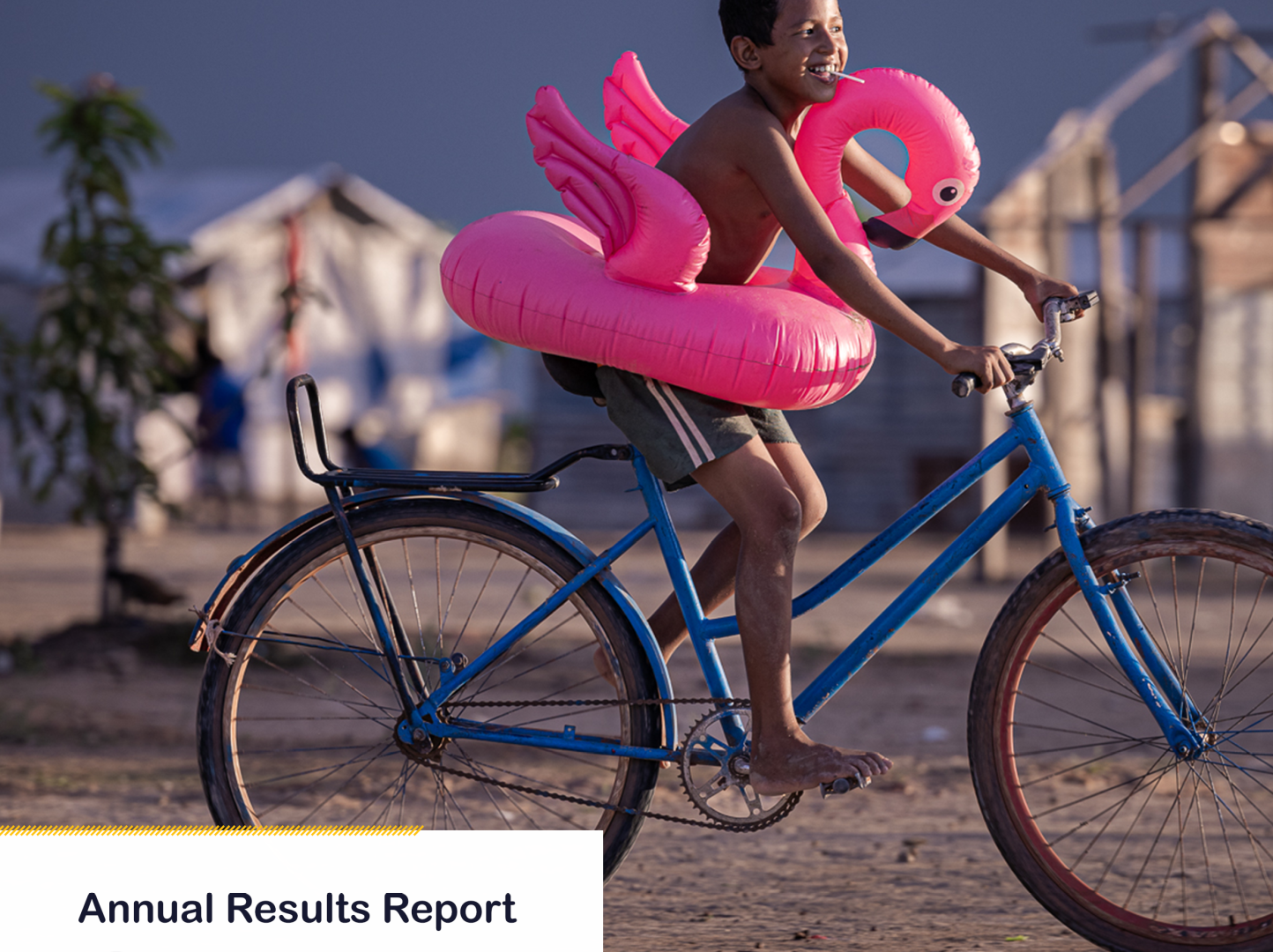
The 2025 Annual Results Report reflects the outcomes of the UN's engagement under the Country Implementation Plan 2024-2025, highlighting how collaboration among UN agencies, the Government of Guyana, civil society, development partners, and communities has contributed to advancing sustainable and inclusive development across the country in support of national development priorities and the Sustainable Development Goals (SDGs).Working closely with national stakeholders, the UN continued to provide rights-based and inclusive support to key populations, including women, youth, persons with disabilities, Indigenous peoples, LGBTIQ+ persons, people living with HIV/AIDS, and migrants. These efforts have helped strengthen social services, promote resilience, and expand opportunities for those most at risk of being left behind.Under the leadership of the Government of Guyana, particularly the Ministry of Finance, the Ministry of Parliamentary Affairs and Governance, and other key ministries, significant progress was achieved in several priority areas. The report highlights advances in strengthening food security and rural livelihoods, expanding digital inclusion, improving access to quality education, healthcare, and social protection services, and promoting climate resilience through disaster preparedness, climate-smart agriculture, and biodiversity conservation.The report also documents continued support for governance and justice reforms, the prevention and response to gender-based violence, and the national HIV response, while emphasizing efforts to build greater inclusion, equity, and resilience across all sectors.These achievements demonstrate the value of strong partnerships and coordinated action in addressing development challenges and accelerating progress towards the SDGs.Read the 2025 UN Guyana Annual Results Report here: https://bit.ly/4fKKFkd
1 of 5

Story
23 July 2026
IOM Chief Visits Guyana, Highlighting Migration as Force for Growth
Guyana is one of the fastest-growing economies in the world, and its expanding industries are creating rising demand for workers. This week, Amy Pope, Director General of the International Organization for Migration (IOM), visited Guyana to discuss opportunities to strengthen IOM’s support to the Member State in managing migration to help power that growth.Guyana's economy is expanding rapidly — its real GDP grew by 19.3 per cent in 2025, according to the Bank of Guyana — driven by growth in energy, construction, healthcare and other sectors, creating strong demand for workers that outpaces the domestic labour supply. At the same time, significant numbers of Guyanese have migrated, representing a potential pool of skills, resources and connections the country could draw on. Together with workers from CARICOM and the wider region, this presents an opportunity for Guyana to address labour shortages, continuing to upskill the local labour force, while building a migration system that safeguards the rights and wellbeing of migrants and Guyanese host communities. "Migration has always been part of Guyana's development story," said Director General Amy Pope. "When it's managed well, it creates opportunities for everyone — local communities, returning Guyanese, and migrants from the region and beyond. Guyana is uniquely positioned to turn migration into a real force for development, and IOM is committed to helping the government build practical solutions that get real results for a broad cross-section of Guyanese society." During her trip, DG Pope met with five Ministers of Government, reflecting how migration touches so many parts of society. She also met with migrants and with IOM staff working across Guyana and the Caribbean. These engagements were intended to ensure that migration policies and programmes remain grounded in the needs of the people they serve, connecting workers with employment opportunities while protecting migrants' rights and supporting community wellbeing.DG Pope also met with the Caribbean Community (CARICOM) Secretariat, which is headquartered in Guyana. As Coordinator of the UN Network on Migration, IOM has been providing technical support to CARICOM, working with countries across the Caribbean to help develop a regional migration governance framework. This framework would support national migration policies that respond to both shared and country-specific migration and labour challenges, including how nations adapt to climate change and shrinking productive populations while sustaining economic growth.IOM has worked in Guyana since 2009, helping the government strengthen migration management in line with its development goals to ensure broad opportunity for Guyanese and the government’s commitment to safe, orderly and regular migration. In this work, IOM draws on its global expertise in areas such as border management, migration data, and protection and assistance for vulnerable migrants and host communities, helping translate national priorities into practical action.For more information, please visit IOM’s Media Centre. This story was first published on IOM's website.
1 of 5

Story
10 July 2026
Strengthening Adolescent Health Services and Education in Guyana
PAHO/WHO, in collaboration with the Ministry of Health, UNFPA, and UNICEF, with support from the Closing the Gaps in Sexual and Reproductive Health and Rights for Women and Adolescent Girls (C-Gaps) Canadian project, conducted a four-day workshop aimed at strengthening adolescent health services at the community level. Bringing together healthcare professionals, community health workers, and key stakeholders, the workshop reinforced Guyana’s commitment to improving the health, well-being, and prospects of its young people.With adolescents and youth aged 10–24 comprising nearly one-third of the population, investing in adolescent health remains a national priority. While Guyana has achieved notable progress in maternal and child health, challenges such as adolescent pregnancy continue to affect rural and hinterland communities disproportionately. Factors including poverty, limited access to comprehensive sexuality education, school dropout, and restricted economic opportunities have contributed to persistent health inequities among adolescents. To address these challenges, the Ministry of Health has expanded adolescent and youth-responsive services through initiatives such as Adolescent Health and Wellness Clinics, Adolescent Antenatal Clinics, and Community Parenting and Support Groups. Complementing these efforts, PAHO/WHO Guyana, UNICEF, and UNFPA supported the training of healthcare workers and equipped health facilities in Regions 2, 3, 4, 6, 7, and 10 with educational models and learning aids to enhance adolescent health education and service delivery.These investments are creating new opportunities for adolescents to access accurate health information, supportive services, and safe spaces where they can learn and thrive. Through interactive learning tools, strengthened healthcare capacity, and sustained partnerships, Guyana is fostering hope for a healthier generation—one empowered to make informed decisions, pursue their goals, and contribute to the nation’s continued development.PAHO/WHO remains committed to providing educational support to improve adolescent health through the empowerment of adolescent support groups. By strengthening their capacity to address challenges and make informed decisions, these initiatives will contribute to better health outcomes and support the achievement of the Sustainable Development Goals (SDGs) by 2030. This article was first published by PAHO/WHO.
1 of 5

Story
08 July 2026
Guyana Advances Toward Its First Biosphere Reserve with UNESCO Support
From 29 June to 3 July 2026, a Program Specialist from the Sciences sector of the UNESCO Office for the Caribbean undertook an official mission to Guyana to advance the UNESCO Man and the Biosphere (MAB) Program.The establishment of a UNESCO Biosphere Reserve in Guyana was identified as a priority during the visit of UNESCO's Director-General to the country in March 2026. Building on this commitment, the technical assistance mission supported national efforts to establish Guyana's first UNESCO Biosphere Reserve.
UNESCO Biosphere Reserves are globally recognized as living laboratories for sustainable development, serving as sites where innovative and interdisciplinary approaches are tested to better understand and manage the relationships between people and nature, promoting biodiversity conservation, safeguarding cultural diversity, and supporting the sustainable use of natural resources.
The mission focused on raising awareness among national stakeholders about the UNESCO MAB Program, strengthening national capacity for the Biosphere Reserve nomination process, and developing a roadmap to guide the preparation of the nomination dossier.
The mission brought together representatives from government agencies, the Iwokrama International Centre, the University of Guyana, and the Guyana National Commission for UNESCO.
During a two-day workshop, participants engaged in technical presentations that deepened their understanding of the UNESCO MAB Program and the Biosphere Reserve nomination process.A collaborative co-creation session also resulted in the development of a first draft roadmap to guide the establishment of the country's first UNESCO Biosphere Reserve.
The mission concluded with meetings with key stakeholders, including a representative of the UN Resident Coordinator's Office in Guyana.UNESCO continues to support countries in balancing biodiversity conservation with sustainable development. This article was first published by UNESCO Kingston.
UNESCO Biosphere Reserves are globally recognized as living laboratories for sustainable development, serving as sites where innovative and interdisciplinary approaches are tested to better understand and manage the relationships between people and nature, promoting biodiversity conservation, safeguarding cultural diversity, and supporting the sustainable use of natural resources.
The mission focused on raising awareness among national stakeholders about the UNESCO MAB Program, strengthening national capacity for the Biosphere Reserve nomination process, and developing a roadmap to guide the preparation of the nomination dossier.
The mission brought together representatives from government agencies, the Iwokrama International Centre, the University of Guyana, and the Guyana National Commission for UNESCO.
During a two-day workshop, participants engaged in technical presentations that deepened their understanding of the UNESCO MAB Program and the Biosphere Reserve nomination process.A collaborative co-creation session also resulted in the development of a first draft roadmap to guide the establishment of the country's first UNESCO Biosphere Reserve.
The mission concluded with meetings with key stakeholders, including a representative of the UN Resident Coordinator's Office in Guyana.UNESCO continues to support countries in balancing biodiversity conservation with sustainable development. This article was first published by UNESCO Kingston.
1 of 5

Story
26 June 2026
Women Diplomats Highlight Culture, Leadership and Soft Power at UN Guyana Event
Women diplomats, government officials, development partners, and other stakeholders gathered for a special event commemorating the International Day of Women in Diplomacy under the theme “Women in Diplomacy: Culture, Soft Power and Inclusive Leadership.”The event was jointly organised by the United Nations in Guyana, the Embassy of the People’s Republic of China in Guyana, the Ministry of Foreign Affairs and International Cooperation and TEDx Turkeyen. It created an engaging platform to celebrate women’s contributions to diplomacy while exploring how culture, identity and storytelling can strengthen dialogue, mutual understanding and international cooperation.The event also took place at a significant moment for Guyana's diplomatic community, as the country proudly announces the candidature of Ambassador Carolyn Rodrigues-Birkett for the position of the next United Nations Secretary-General. Her candidacy reflects Guyana's longstanding contribution to multilateral diplomacy and highlights the growing leadership of women from the Caribbean on the global stage. Opening remarks were delivered by Jean Kamau, United Nations Resident Coordinator for Guyana; H.E. Yang Yang, the Ambassador of the People’s Republic of China to Guyana and Ambassador Donnette Streete, Director of Frontiers Unit, Ministry of Foreign Affairs and International Cooperation. The speakers underscored the importance of women’s full, equal and meaningful participation in diplomatic leadership and decision-making, while recognising diplomacy as a tool for building trust, advancing shared interests and responding to increasingly complex global challenges.A central feature of the programme was a series of TED-style cultural storytelling presentations delivered by female representatives from the Ministry of Foreign Affairs and International Cooperation, the Embassy of China and the High Commission of Canada. Speakers wore traditional, national or culturally significant attire and shared personal reflections on the history, symbolism and values represented by their garments.The presentations demonstrated how culture can serve as a form of soft power, communicating national identity, preserving heritage and creating meaningful connections across countries and communities. The storytelling format also provided women diplomats with an opportunity to share their experiences and perspectives in a personal, accessible and inspiring manner.Through TEDx Turkeyen’s partnership, participants received guidance on developing engaging presentations and delivery through storytelling. This equipped participants with valuable public speaking and communication skills that can be applied across professional and public platforms.The event reaffirmed that women diplomats are not only representatives of institutions and countries, but also negotiators, bridge-builders, cultural ambassadors and leaders whose perspectives are essential to more inclusive and effective diplomacy.The United Nations in Guyana remains committed to working with the Government of Guyana, development partners and national stakeholders to advance gender equality, inclusive leadership and women’s meaningful participation in decision-making at all levels. Participants at the event included officials and diplomats from the embassies of Argentina, Chile, the United Kingdom, Dominican Republic, UN agencies, IDB, World Bank, Mexico, Qatar and the United Arab Emirates, as well as representatives from CARICOM and Canada. The University of Guyana-Institute of Gender Studies and International Relations programmes and young women from The Imperial House were also in attendance. Their participation reflected the event’s emphasis on international and national partnership, cultural exchange and the value of diverse voices within diplomacy.
1 of 5

Press Release
27 July 2026
UN Guyana Statement on the sinking of the MV Barima
We send our sincere condolences to the Government and people of Guyana and the families of those affected. We wish the survivors a speedy recovery. The UN Country Team expresses sincere gratitude for the ongoing dedication of the Office of the Prime Minister, Ministry of Public Works, regional and local authorities and everyone working tirelessly in rescue and recovery efforts. The United Nations reaffirms its solidarity with the people and Government of Guyana.
1 of 5
Press Release
26 May 2026
UN80 Initiative: New report warns status quo is “untenable” as reforms enter decisive phase
NEW YORK, 26 MAY 2026 – United Nations Secretary-General António Guterres today issued a progress report on the UN80 Initiative, outlining reforms underway across the UN system and urging strong Member States’ engagement to move the process forward. “The status quo is untenable,” he warns, arguing that the choice is between planned reform, led by Member States, or externally imposed, crisis-driven change. The report places the Initiative in a new “decisive phase”. It shows where UN80 has generated movement, and how reform proposals are advancing along their decision pathways. It distinguishes issues that are ready, or nearly ready, for decision-making from those requiring further design and consultation. It also makes clear where political support and decisions are now needed to carry reform all the way.Progress Across the Initiative The report describes key reforms already underway to strengthen impact, reduce fragmentation and duplication across the UN system, while recognizing that progress is advancing at different speeds. Key developments include:The adoption of General Assembly resolution 80/251, establishing a new basis for mandate discipline and strengthening how UN system mandates are created, implemented and reviewed;Changes to the Secretariat’s operating model, including a 21 per cent reduction in staff positions in 2026, new common administrative platforms and the relocation of about 230 posts from high to lower-cost locations, as part of about 2,300 positions UN system-wide;New delivery models, including integrated supply chains under the New Humanitarian Compact, now being piloted in Afghanistan, Haiti, the Occupied Palestinian Territory, Somalia and Sudan, alongside the empowerment of Resident and Humanitarian Coordinators working in crisis settings;A forthcoming peace operations review, expected in June, which will present recommendations to adapt the UN’s toolbox and create a more flexible peace operations architecture fit for today’s challenges;Reconfiguring UN country teams, resetting regional arrangements, and improving access to support for countries via an Expertise-on-Demand Mechanism and Joint Knowledge Hubs to accelerate the delivery of Sustainable Development Goals;The establishment of the Human Rights Group to better coordinate human rights work across the UN system;Work to strengthen shared services, technology and data capacities across the UN system, including a new Unified Services Roadmap for all administrative services, a UN System Data Commons, and Technology Accelerator Platform to better connect these critical enablers of delivery.Other structural proposals, including assessments of potential mergers involving UN system entities.Shared Responsibilities for the Next Phase Member States will help shape the next phase of the Initiative. “From now on, Member States will craft the key outcomes of UN80,” the Secretary-General writes, noting that many of the proposals will move through established intergovernmental processes in line with the UN Charter, existing mandates and applicable rules and procedures. The Secretary-General sets out six priorities to move the initiative from reform design to delivery. He urged governments to use resolution 80/251 as a practical governance instrument; provide clear direction on country and regional reform; back shared services, technology and data as system-wide enablers; assess structural proposals on their merits, align funding practices with coherent delivery; and exercise governance consistently across the UN system.Inaction, Guterres warns, would be “a mistake and a failure of responsibility,” adding that the political and technical investment made since March 2025 now needs to be taken to its most impactful conclusion. “The opportunities carefully constructed over the past year could slip away and the moment could be lost”, he cautions. “Our shared responsibility is to make sure that does not happen.” Media Contacts UN80 Secretariat un80contact@un.org
1 of 5
Press Release
12 February 2026
Strengthening Guyana’s Seafood Value Chain through One UN Action: FAO, ILO, and ITC Partner to Enhance Linkages in Guyana’s Seafood Sector
The Food and Agriculture Organization of the United Nations (FAO), the International Labour Organization (ILO), and the International Trade Centre (ITC) collaborated with the Ministry of Agriculture and the Ministry of Labour to host a one-day workshop on Monday, 9 February 2026. Titled “Strengthening Guyana’s Agribusiness: From Fisheries Cooperatives to Seafood Markets”. The workshop brought together fisheries cooperatives, seafood and agrifood businesses, banks, business support organizations, and policymakers. Its main goal was simple: to help fisheries cooperatives connect more easily with buyers, markets, and sources of finance in Guyana. By creating space for these groups to meet, talk, and plan together, the event aimed to reduce gaps in the seafood value chain and to support more stable, profitable business relationships.Minister of Labour and Manpower Planning, Hon. Keoma Griffith, in his keynote address, said, “The forum is timely as it ensures that Guyana’s fisherfolk are fully part of the country’s ongoing development and transformation”. He indicated that the government supports these partnerships between international organizations, cooperatives, and the private sector to build more resilient agricultural and fisheries systems that can drive inclusive economic growth in Guyana and across the Caribbean.” Mr. Denzel Roberts, Chief Fisheries Officer of the Department of Fisheries, Ministry of Agriculture, echoed Minister Griffith’s sentiments that the Government of Guyana supports the development of fish cooperatives and this workshop. He added that the event will create linkages between fisherfolk and financial institutions and help the sector access new markets, in line with the Government’s objectives.The event was supported by business stakeholders such as national banks, regional partners, and the Georgetown Chambers of Commerce and Industry. Their involvement facilitated discussions beyond ideas towards practical partnerships that can improve access to markets and finance. Over time, these partnerships can help cooperatives invest in better equipment, improve product quality, and increase production, leading to higher incomes and more secure jobs in fishing and related industries.Rory Osborne, a fisher from Wakenaam, noted, “This event opened my eyes to all the things required to run a coop and was great for networking with new people”.Victor Mangru, a fisher from Region Three, added that “The event is great because I’ve been able to meet people like business incubators, supermarkets, and banks, which can help my business grow”.Through focused discussions and networking sessions, participants shared practical ways to work together more effectively. They looked at how to strengthen relationships between suppliers and buyers, improve productivity and quality, and adopt responsible business practices across the fisheries and agrifood sectors. Special attention was given to the needs of cooperatives, small-scale producers, and micro, small, and medium-sized enterprises (MSMEs), so that growth in the sector benefits a wider range of people.Labour standards and decent work were a key part of the conversation. By encouraging businesses and cooperatives to follow fair labour practices from the start, the workshop helped to link market growth with safer working conditions, skills development, and more stable employment for Guyanese workers.The workshop also allowed representatives from the Ministry of Labour and the Ministry of Agriculture to engage directly with private-sector actors. This will help to ensure that new business partnerships support national priorities, including sustainability, inclusive growth, and decent employment. When public policy and private investment work in the same direction, successful models can be expanded and have a greater impact across the sector.The representative of Survival Supermarket said that this was a beneficial event for first engagement, and he can see great potential with new seafood suppliers.The collaboration reflects the different but complementary roles of the partners involved:FAO works to strengthen sustainable fisheries, agrifood systems and livelihoods;ITC supports MSMEs to become more competitive and access markets;ILO promotes decent work and respect for labour standards; andGuyana’s Ministry of Agriculture and Ministry of Labour provide national leadership on sector development and employment.By strengthening links within Guyana’s seafood value chain, the workshop supports national development goals such as job creation, economic diversification and food system resilience. In the longer term, stronger and more inclusive value chains can increase incomes for workers and producers, attract investment, and boost the seafood sector’s contribution to the national economy.The event also supports the goals of the FISH4ACP programme, which aims to make fisheries and aquaculture value chains more sustainable, inclusive and resilient. It contributes to progress on the Sustainable Development Goals (SDGs), particularly those related to decent work, economic growth, innovation and sustainable use of marine resources.FISH4ACP is an initiative of the Organisation of African, Caribbean and Pacific States (OACPS) aimed at making fisheries and aquaculture value chains in Africa, the Caribbean and the Pacific more sustainable. FISH4ACP is implemented by FAO with funding from the European Union (EU) and the German Federal Ministry for Economic Cooperation and Development (BMZ). Mr. Joan Nadal Sastre, Head of Cooperation for Guyana and Suriname, Delegation of the European Union to Guyana, Suriname and CARICOM, said the EU supports this initiative that will create local added value, stimulate growth, generate decent jobs, and strengthen cohesion that are aligned with the European Union values – particularly inclusion, social cohesion and sustainable development.Looking ahead, the United Nations partners will focus on translating the workshop outcomes into concrete business opportunities for fisheries cooperatives. They hope to sustain the commercial linkages between cooperatives, banks, and supermarkets, strengthen cooperatives’ competitiveness to be more market driven, increase sales volumes, and position them as viable players in Guyana’s seafood market. FAO, ITC and ILO, together with national partners, reaffirmed their commitment to follow up on the outcomes of the workshop and continue supporting the development of competitive, sustainable, and inclusive fisheries and agribusiness value chains that deliver lasting benefits for Guyanese workers, communities, and the economy.
1 of 5
Press Release
27 January 2026
UN announces new Expert Advisory Panel to advance efforts in quantifying countries’ multidimensional vulnerabilities
The UN General Assembly’s establishment of the Multidimensional Vulnerability Index (MVI) signals the international community’s recognition that vulnerability poses a major obstacle to sustainable development, particularly as countries face increasing exposure to exogenous shocks and stressors. The MVI measures the structural vulnerability and limited structural resilience of all developing countries and serves as a diagnostic tool to guide coordinated action, improve development decision-making and resource allocation. The Panel is mandated to help ensure the continued robustness, relevance, and credibility of the MVI. Its responsibilities include conducting triennial reviews of the index; monitoring progress by developing countries in reducing structural vulnerabilities; evaluating emerging concepts and data; and reviewing lessons learned from the use of the MVI across the UN system and beyond. Serving in their personal capacity, the Panel’s members bring diverse expertise spanning economic development, social development, environmental protection, vulnerability measurement, and resilience-building. The Panel reflects broad geographical and gender balance and includes leaders from the public sector, academia, civil society, and the international community. Congratulating the panel, Rabab Fatima, UN Under-Secretary-General and High Representative for the Least Developed Countries, Landlocked Developing Countries and Small Island Developing States (OHRLLS), said, “The establishment of the MVI Advisory Panel marks a critical milestone in advancing our collective understanding of structural vulnerability. For far too long, the most vulnerable countries —LDCs, LLDCs and SIDS — have faced exogenous shocks that undermine hard-won development gains and constrain sustainable progress. The MVI is a long-overdue evidence-based instrument to capture these realities. I am confident that the distinguished members of this Panel will help ensure that the Index continues to evolve as a robust instrument to inform policy, enhance access to finance, and support more equitable and resilient development outcomes.”The MVI Advisory Panel will be supported by a dedicated Secretariat, responsible for maintaining the Index and conducting periodic updates. In addition, the Secretariat will carry out a range of functions aimed at strengthening and reporting on the index, including providing capacity-building support to Member States. As part of the governance framework, the UN Statistical Commission will conduct technical reviews of any future enhancements to the index.“The establishment of the Multidimensional Vulnerability Index (MVI) signals a vital recognition that vulnerability to external shocks is a primary obstacle to sustainable development…. To capitalize on the momentum developing countries must advance transformative national development agendas that shockproof their vulnerable economies,” stated Li Junhua, UN Under-Secretary-General for Economic and Social Affairs (UN DESA). He added, “In parallel, the international community must deliver targeted financing at speed and scale. For this to work, consideration of multidimensional vulnerability and its impact cannot be an exception; it must be the norm in the financing policies of IFIs and development partners.” Panel MembershipThe Advisory Panel comprises 15 experts selected from across regions, sectors, and disciplines. Their CVs are available here. Ms. Sabina Alkire — United States Ms. Amatalalim (Amat Al Alim) Alsoswa — Yemen Mr. Tumasie Blair — Antigua and Barbuda Mr. George Carter — Samoa Mr. Paul Cheung — Singapore Mr. Jean‑Christophe Donnellier — France Mr. ZENG Fei — China Ms. Salmou Gourouza Magagi — Niger Mr. Edgar Gutiérrez‑Espeleta — Costa Rica Ms. Fahmida Khatun — Bangladesh Mr. José Antonio Ocampo — Colombia Ms. Adela Raz — Afghanistan Ms. Therese Turner‑Jones — Bahamas Ms. Dzodzi Tsikata — Ghana Mr. Kerfalla Yansane — GuineaNext StepsThe Panel will convene its first meeting in 2026 to adopt its work programme and initiate preparations for the first triennial review of the MVI due in 2028. Additional information: Report:High-level panel on the development of a Multidimensional Vulnerability IndexMultidimensional Vulnerability Index for SIDS (UN DESA)Multidimensional Vulnerability Index (OHRLLS) For more information and for interview requests, please contact: May Yaacoub | UN Office for the Least Developed Countries, Landlocked Developing Countries and Small Island Developing States | yaacoubm@un.orgSharon Birch | UN Department of Global Communications | birchs@un.org Helen Rosengren |UN Department of Economic and Social Affairs | rosengrenh@un.org
1 of 5
Press Release
08 January 2026
Global economy shows resilience, but trade tensions and fiscal strains cloud outlook, UN warns
New York, 8 January 2026 – Global economic output is forecast to grow by 2.7 per cent in 2026, slightly below the 2.8 per cent estimated for 2025 and well below the pre-pandemic average of 3.2 per cent, according to the World Economic Situation and Prospects 2026, released by the United Nations today.During 2025, unexpected resilience to sharp increases in U.S. tariffs, supported by solid consumer spending and easing inflation, helped sustain growth. However, underlying weaknesses persist. Subdued investment and limited fiscal space are weighing on economic activity, raising the prospect that the world economy could settle into a persistently slower growth path than in the pre-pandemic era. The report notes that a partial easing of trade tensions helped limit disruptions to international commerce. However, the impact of higher tariffs, coupled with elevated macroeconomic uncertainties, is expected to become more evident in 2026. Financial conditions have eased amid monetary loosening and improved sentiment, but risks remain high given stretched valuations—especially in sectors linked to rapid advances in artificial intelligence. Meanwhile, high debt levels and borrowing costs are constraining policy space, especially for many developing economies.“A combination of economic, geopolitical and technological tensions is reshaping the global landscape, generating new economic uncertainty and social vulnerabilities,” said United Nations Secretary-General António Guterres. “Many developing economies continue to struggle and, as a result, progress towards the Sustainable Development Goals remains distant for much of the world.”Regional economic outlook: expansion broadly steady, but uneven Economic growth in the United States is projected at 2.0 per cent in 2026, compared to 1.9 per cent in 2025, supported by monetary and fiscal easing. However, a softening labour market will likely weigh on momentum. In the European Union, economic growth is forecast at 1.3 per cent in 2026, down from 1.5 per cent in 2025, as higher U.S. tariffs and ongoing geopolitical uncertainty dampen exports. Output in Japan is expected to expand by 0.9 per cent in 2026, compared with 1.2 per cent in 2025, with a modest domestic recovery partly offsetting weaker external conditions. In the Commonwealth of Independent States and Georgia, growth is projected at 2.1 per cent in 2026, mostly unchanged from 2025, even as the war in Ukraine continues to weigh on macroeconomic conditions. In East Asia, growth is projected at 4.4 per cent in 2026, down from 4.9 per cent in 2025 as the boost from front-loaded exports fades. China’s economy is expected to grow by 4.6 per cent, slightly lower than in 2025, supported by targeted policy measures. In South Asia, growth is forecast at 5.6 per cent in 2026, easing from 5.9 per cent, led by India’s 6.6 per cent expansion, driven by resilient consumption and substantial public investment. In Africa, output is projected to grow by 4.0 per cent in 2026, marginally up from 3.9 per cent in 2025. However, high debt and climate-related shocks pose significant risks. In Western Asia, GDP is expected to grow by 4.1 per cent in 2026, up from 3.4 per cent in 2025, yet the region remains exposed to geopolitical tensions and security risks. In Latin America and the Caribbean, output is expected to expand by 2.3 per cent in 2026, slightly down from 2.4 per cent in 2025, amid moderate growth in consumer demand and a mild recovery in investment.International trade facing headwinds; investment remains subduedGlobal trade proved resilient in 2025, expanding by a faster-than-expected 3.8 per cent despite elevated policy uncertainty and rising tariffs. The expansion was driven by the front-loading of shipments early in the year and robust growth in services trade. However, momentum is expected to ease, with trade growth projected to slow to 2.2 per cent in 2026. At the same time, investment growth has remained subdued in most regions, weighed down by geopolitical tensions and tight fiscal conditions. Monetary easing and targeted fiscal measures have supported investment in some economies, while rapid advances in artificial intelligence fuelled pockets of strong capital spending in a few large markets. The report cautions, however, that the potential gains from AI, when realised, are likely to be unevenly distributed, risking a widening of existing structural inequalities.Inflation continues to slow, yet strains to the cost of living persist The report also underscores that high prices remain a key global challenge even as disinflation continued. Headline inflation declined from 4.0 per cent in 2024 to an estimated 3.4 per cent in 2025 and is projected to slow further to 3.1 per cent in 2026. While overall inflation has moderated, elevated prices continue to weigh on real incomes. Unlike the globally synchronized surge of previous years, inflation trends have become more uneven, shaped by recurring supply bottlenecks amid rising geopolitical and climate‑related risks. Policymakers face an increasingly complex inflation landscape, where supply risks call for a more coordinated and forward-looking approach. Monetary policy remains central but needs to work with credible fiscal frameworks and targeted social measures to protect vulnerable groups. Sectoral polices also play a role by expanding productive capacity and strengthening supply chains, especially in food, energy and logistics. Coordinated action across monetary, fiscal and industrial policies will be critical to managing persistent price pressures without compromising social stability or long-term growth.“Even as inflation recedes, high and still rising prices continue to erode the purchasing power of the most vulnerable,” said Li Junhua, United Nations Under-Secretary-General for Economic and Social Affairs. “Ensuring that lower inflation translates into real improvements for households requires safeguarding essential spending, strengthening market competition, and tackling the structural drivers of recurring price shocks.”Call for renewed multilateral actionThe report underscores that navigating an era of trade realignments, persistent price pressures, and climate-related shocks will demand deeper global coordination and decisive collective action at a time when geopolitical tensions are rising, policies are becoming more inward-looking, and impetus towards multilateral solutions is weakening. Sustained progress will depend on rebuilding trust, strengthening predictability, and renewing the commitment to an open, rules-based multilateral trading system.The Sevilla Commitment, the outcome document of the Fourth International Conference on Financing for Development, offers a forward-looking blueprint to strengthen multilateral cooperation, reform the international financial architecture, and scale up development finance. Delivering on its key priorities—including clearer debt workout modalities and expanded concessional and climate finance—is essential to reducing systemic risks and fostering a more stable and equitable global economy. ~The World Economic Situation and Prospects 2026 will be available on 8 January, 12:45 pm EST at desapublications.un.org.Hashtag: #WorldEconomyReportMedia Contacts: Martin Samaan, UN Department of Global Communications, samaanm@un.orgHelen Rosengren, UN Department of Economic and Social Affairs, rosengrenh@un.org
1 of 5
Latest Resources
1 / 11


Resources
16 April 2026


1 / 11